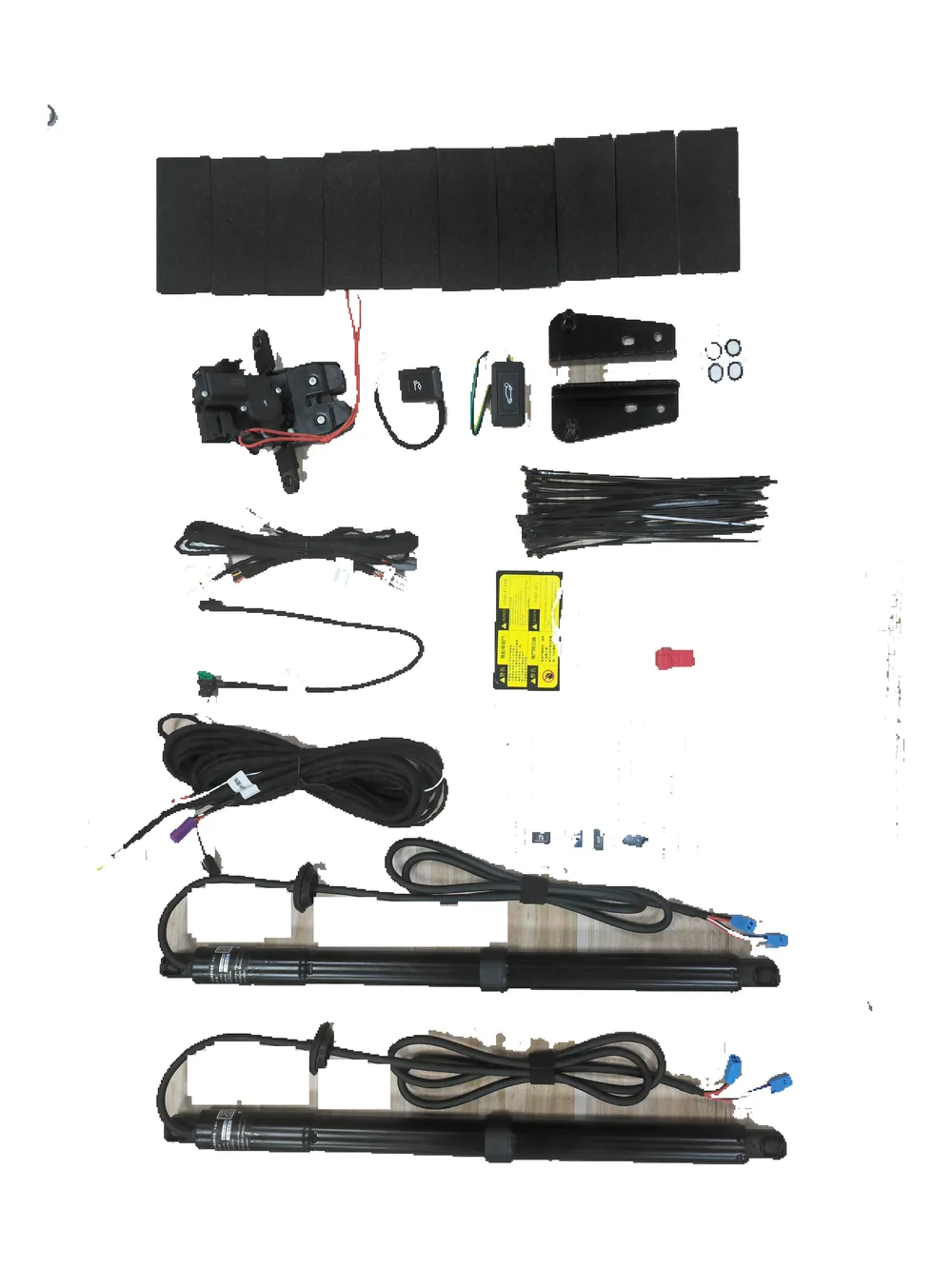
Short answer: Count cartons against the packing list first, then check 5 things on a sample unit: both struts present and matching the programme, the control module part number matching the quotation, harness ends being factory connectors rather than cut wires, the latch moving freely, and the gate stopping and reversing when it meets an obstruction. Raise any discrepancy in writing before signing the delivery note.
What the question actually is
A container of kits arrives. The cartons look right. Someone signs the delivery note, and the container is emptied over the next two weeks.
Two months later a customer says a kit is missing a latch. By then the question is no longer "did it arrive" but "can you prove it did not" — and the answer depends entirely on what was checked on the day it arrived.
This checklist exists to move that conversation to arrival day, when it is cheap. It is written to be usable by whoever opens the carton.
Before you open anything
Match the carton count to the packing list. Every carton has a model marking, because a mixed order has multiple programmes in it. Count by model, not by total — a total that matches while the model split does not is a mixed order with the wrong cartons in it.
Check the outer condition and photograph it. Dented cartons are not automatically damaged goods, but a photo taken before opening settles a freight claim that is otherwise an argument.
Keep the packing list with the delivery note. When a discrepancy appears, these two documents are what the claim is built on.
The five checks on a sample unit
Open one carton and check these five in order. They are chosen because each one, if wrong, is expensive to discover later.
1. Both struts present, and matching the programme. A kit should contain two power struts. Check they are physically the same length and that any part marking matches the programme on the quotation. A kit with one strut is a universal kit mislabelled, and it will load the gate off-centre.
2. The control module part number matches the quotation. The module is the part that ties the kit to the vehicle. Read the part number off the label and compare it to the quotation. This single check catches most programme mix-ups, because the label is what gets read off a shelf.
3. Harness ends are factory connectors. Look at the ends of the main harness. They should terminate in vehicle-side plugs, not in bare or taped wire. If the ends are cut wire, the kit requires splicing into the original loom, which is a different product from what was quoted.
4. The latch moves freely by hand. Push the latch mechanism through its travel. It should move smoothly and return. A latch that feels gritty or sticks is a corrosion or packing problem, and it is cheaper to catch now than after installation.
5. Anti-pinch stops and reverses. Connect a sample unit to 12V, start the gate closing, and obstruct it with a firm object. The gate should stop and reverse, not continue through the obstruction. Do not use a hand for this test; use something rigid that will not be injured if the function fails.
What to do when something is wrong
Do not install it. A kit that is short a part, or has the wrong module, will not be fixed by proceeding and reporting later.
Write it down before signing. The delivery note is the document that matters. A note on it — "carton 4 of 12, latch missing" — is worth more than an email the following week.
Send photographs of what you found. The label, the open carton, the packing list line it should have matched. It resolves the discrepancy without a debate about which carton was which.
Check the rest of the shipment. If one carton has a module from the wrong programme, the others in the same batch are worth a look.
What we do on our side
- Every kit is packed against a confirmed order, not taken from finished-goods stock, so the item list on the quotation is the packing list.
- Cartons are marked per model, which is what makes a mixed order checkable on arrival.
- The module part number is on the label, so it can be read without opening a sealed module.
- Discrepancies reported with photographs are resolved as a claim, not a negotiation about whether the part was ever in the box.
What we do not do is tell you every shipment is perfect and leave you to find out otherwise. The checklist is the same one the packing step works against.
What to do next
If you are preparing a first order, the kit contents page shows what should be in the box, item by item, so the count check has something to check against. For installation-side checks — the ones that happen after the box is opened — see the installation checklist.
- Kit contents — what should be in the carton
- Kit specification — programme and item detail
- Installation checklist — checks after the box is open
- Wholesale terms — packing and order terms
Frequently asked questions
What should I check before signing the delivery note?
Count cartons against the packing list by model, photograph any crushed carton, and open a sample unit to run the five checks. If anything is missing or mismatched, write the specific note on the delivery note itself before signing — it is the document a claim rests on.
How do I test the anti-pinch function?
Connect a sample unit to 12V, start the gate closing, and obstruct it with a rigid object. The gate must stop and reverse. Do not use your hand, and test before installation rather than after, when a failure means removing the trim again.
What if a part is missing or the module is wrong?
Do not install the kit. Photograph the carton, the label and the packing list line, report it in writing, and check the rest of the shipment for the same batch problem. A missing part or mismatched module is a claim, not something to work around.
Do I need to test every set in the order?
No. Sample units per model are enough for arrival checks, because the failure modes this checklist catches are batch and packing problems rather than per-unit ones. Test one per model, and run the anti-pinch check on that unit before installation begins rather than after.