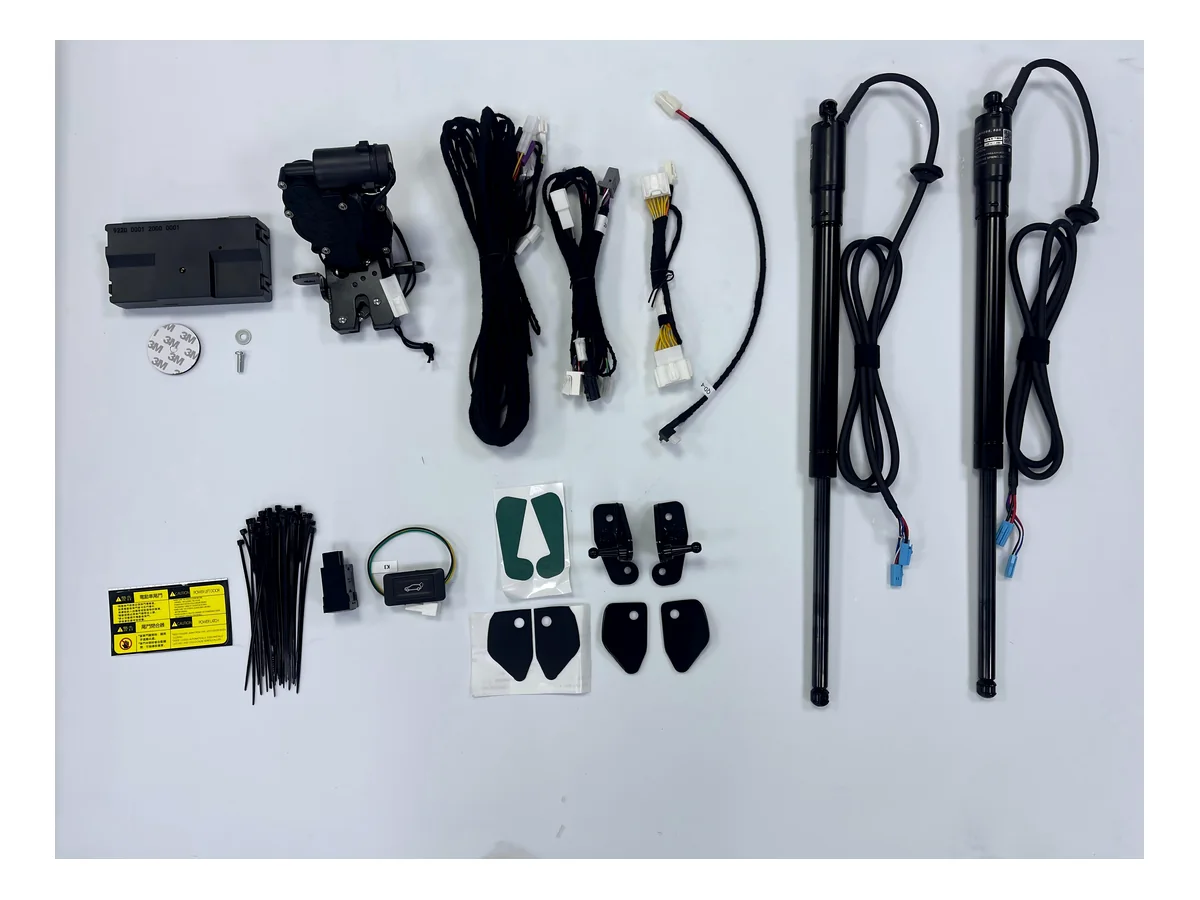
Short answer: OEM means a part made by the vehicle manufacturer's original supplier and sold under their brand; aftermarket means a third party made it. Almost every power tailgate retrofit is aftermarket, including ours. What matters is whether the kit is configured to one vehicle programme — a configured kit carries a programme identifier, a written item list, and a minimum order of 100 sets.
What the question actually is
The words get used loosely, and the looseness costs buyers money.
OEM in the strict sense means Original Equipment Manufacturer: the company that makes a part for the vehicle manufacturer, selling that same part under its own name. OE means the part as supplied to the manufacturer, sold under the manufacturer's brand — usually in a dealer box, at dealer prices.
Aftermarket means a third party made it. That is not a quality statement. Some aftermarket parts are better than the factory part; some are far worse. The category tells you who made it, not whether it is any good.
For power tailgates specifically, an important fact gets lost: the vehicle manufacturer does not sell most models with a retrofit kit. If the car left the factory without an electric tailgate, there is usually no OEM conversion kit to buy. Whatever is installed afterwards is aftermarket by definition.
So the real question a buyer should ask is not "is this OEM" but "is this configured for my vehicle, and can that be verified".
How to tell a configured kit from a universal one
Four checks, in order of how much they tell you:
1. Is there a programme identifier? A configured kit is matched to a vehicle programme, and that programme has an identifier — either a module part number or a programme code. Ask for it in writing. A universal kit has nothing to give you, because it is not matched to anything.
2. Is the control module dedicated or shared? A dedicated module is programmed for the vehicle's protocol. A universal module works by sensing current and approximating when the gate has reached the top. The second kind usually works on installation day and behaves oddly months later.
3. Does the harness end in factory connectors? A configured kit plugs in. A universal kit is spliced. Cut wires are the single most common starting point for later electrical faults, and the first thing a dealer points at in a warranty conversation.
4. Is there a written item list with quantities? Two struts, one module, one harness, one latch, switches, brackets. Specific quantities and part references. This is what makes a kit verifiable on arrival — see what a complete kit contains for the full list and what a cut-down kit is missing.
If a supplier cannot answer all four for your specific vehicle, the question "is it OEM" is moot. There is nothing underneath it.
What our kit is, stated plainly
Our kit is aftermarket, and we say so. It is not made by Toyota, Honda, Isuzu or any vehicle manufacturer, and it is not sold in a dealer box.
What it is: a configured set matched to a vehicle programme in our database — two dual-motor struts, a control module programmed to that vehicle, a pre-terminated harness using factory connectors, a soft-close latch, switches and model-specific brackets. Kits are built against a confirmed order rather than held as stock, with a minimum order of 100 sets and a lead time of about 30 working days after deposit.
What we do not claim:
- We do not claim the result is identical to a factory option. It is a configured aftermarket system designed to behave the same way in normal use.
- We do not claim our kit is OEM. It is not, and saying otherwise would be a lie a buyer could check in five minutes.
- We do not publish load or IP ratings we have not finished testing. If a number is not on the kit specification page, it is because we cannot document it yet.
If the only failed part is a strut on an existing factory system, the right product may be a replacement strut matched by part number rather than a full kit — see OE replacement struts.
What to do next
If you are comparing suppliers, apply the four checks above to each one. The answers separate a configured kit from a box of parts regardless of what either calls itself.
If you want our answer for your vehicle, send the model and year. We will reply with the programme identifier, the item list, and the MOQ and lead time in writing — normally within one business day. Trade terms are on the wholesale page.
Frequently asked questions
Is your kit OEM?
No. Our kit is aftermarket: it is designed and built by us, not by the vehicle manufacturer or its original supplier, and it is not sold in a dealer box. It is configured to a specific vehicle programme, which is a different claim from being OEM and is verifiable by programme identifier.
What is the difference between OE and OEM parts?
An OE part is the part as supplied to the vehicle manufacturer, sold under the manufacturer's brand. An OEM part is made by the original supplier and sold under the supplier's own brand — often identical, usually cheaper. Both are distinct from aftermarket, which means a third party made it.
Can an aftermarket power tailgate affect the manufacturer warranty?
It can, depending on the dealer and the market, and no supplier can rule on that for you. What reduces the risk is a documented installation that does not cut into the original loom and uses factory mounting points, so the work is defensible rather than improvised.
How do I verify a kit is configured for my vehicle?
Ask for the programme identifier, the dedicated control module part number, and a written item list with quantities before paying. A configured kit can produce all three on request. A universal kit answers with model names and adjectives instead, and that difference is visible before any money changes hands.