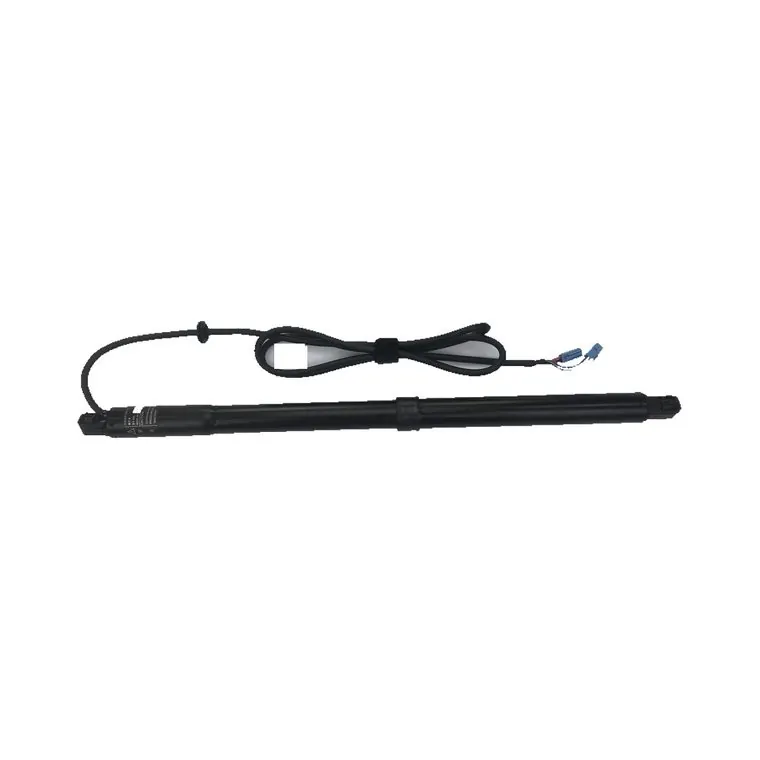
Short answer: Usually yes. A kit is built from separate parts — 2 struts, 1 control module, 1 harness, 1 soft-close latch, switches and brackets — so a failed strut can be replaced on its own, and so can a latch or a switch. Whether spare parts are stocked for a specific programme is stated in writing on the quotation.
What the question actually is
The worry behind the search is simple: a whole kit costs real money. If one strut fails in two years, does the whole installation become scrap?
That depends entirely on how the kit was built. A sealed assembly has to be replaced as a unit. A kit assembled from separate parts can be repaired part by part — but only if the spares exist for that programme and the part can be identified.
Three questions are actually being asked:
- Can a single part be replaced, or must the kit be replaced whole?
- Can I identify the right part when I need one?
- Will the part still be available two or three years after the order?
The first is a design question. The second and third are support questions, and they are where cheap kits fail quietly.
What can be replaced, and what usually cannot
Struts — replaceable individually. This is the most common failure and the most replaceable part. A strut is a mechanical unit bolted to factory mounting points. Replacing one rather than a pair is a decision for the installer, but the part itself is replaceable.
Latch — replaceable. The soft-close latch is a separate module. Its variant matters (upper or lower depending on model), so the replacement has to match the programme, not just the vehicle name.
Control module — replaceable, but programme-bound. The module is the part that ties the kit to the vehicle. A replacement must be programmed for the same programme, which is why the module part number matters at order time.
Harness — replaceable, and worth replacing rather than repairing. A damaged harness on a plug-and-play kit is a plug-in replacement. Repairing one means cutting and joining, which is exactly what the design was chosen to avoid.
Switches and brackets — replaceable. Low cost, low risk, and the parts most likely to be damaged in a workshop rather than in service.
The motor inside a strut — not separately replaceable on most designs. A strut is a sealed unit; the motor and gearing are inside it. That is why "the motor died" usually means "replace that strut", not "replace the motor".
Why the spares question is where kits differ
Two kits can look identical in a photo and behave completely differently in year three.
A kit built from separate parts can be repaired: the strut, module and latch each carry a reference, so a replacement can be ordered against them and the rest of the installation stays in place.
A kit built as an integrated unit must be replaced whole when any major part fails. That is not always a bad design, but it changes the cost of a failure from one part to the whole kit.
What determines which you have is not the price. It is whether the supplier can give you part references at order time. A supplier who cannot tell you the strut reference for your programme cannot sell you one later either.
What we do
- Our kits are built from separate parts, with identifiable references for the strut, module, harness, latch and switches.
- Spares availability for a specific programme is stated in writing on the quotation. We do not publish a blanket "all parts always available" claim, because a programme that has been superseded may have limited spares.
- The module is programmed to the programme, not to the kit as a whole, so replacing it does not disturb the rest of the installation.
- For an existing factory electric tailgate that has failed, the right part is often a replacement strut matched by part reference rather than anything from our retrofit range — see OE replacement struts.
What we do not claim: that every part is available forever. What we do is tell you, before you order, which spares we can commit to for that programme.
What to record at installation time
The insurance against a future parts problem costs nothing on installation day:
- The programme identifier and module part number, written down and kept with the vehicle's service record.
- The strut part reference, from the label on the strut.
- The latch variant — upper or lower.
- The installation date, so a future failure can be compared against the terms.
A photograph of the open carton with the labels visible, taken on arrival, covers all four in one shot. It is the cheapest documentation you will produce.
What to do next
If you need a part for a kit you already have, send the programme identifier and a photo of the failed part's label. If you are ordering, ask what spares we can commit to at quotation stage.
- Kit specification — what a set contains, part by part
- Kit contents — the item list to check against
- OE replacement struts — for a factory system that needs only the strut
- Wholesale terms — ordering and trade conditions
Frequently asked questions
Can I replace just one strut?
Yes. Struts are separate parts bolted to factory mounting points, so a failed strut can be replaced on its own. Whether an installer recommends replacing both at once is a judgement about even wear, not a requirement of the design.
Do you stock spare parts?
Spares availability is stated per programme on the quotation rather than promised universally, because a superseded programme may have limited stock. What we can commit to for your specific programme is written down before you order, so a future part request starts from a stated answer rather than a hope.
How do I identify the correct replacement part?
Use the programme identifier from your original order, plus the part reference printed on the failed part's label. If those are not recorded, a photograph of the label is usually enough to identify it, which is why the label is worth photographing on arrival.
Is it cheaper to replace the whole kit instead?
Usually not. Replacing one strut or one latch leaves the rest of the installation intact, including the wiring, module and brackets. A whole-kit replacement only makes sense when the vehicle programme itself changed, or when several parts failed together for a common reason.