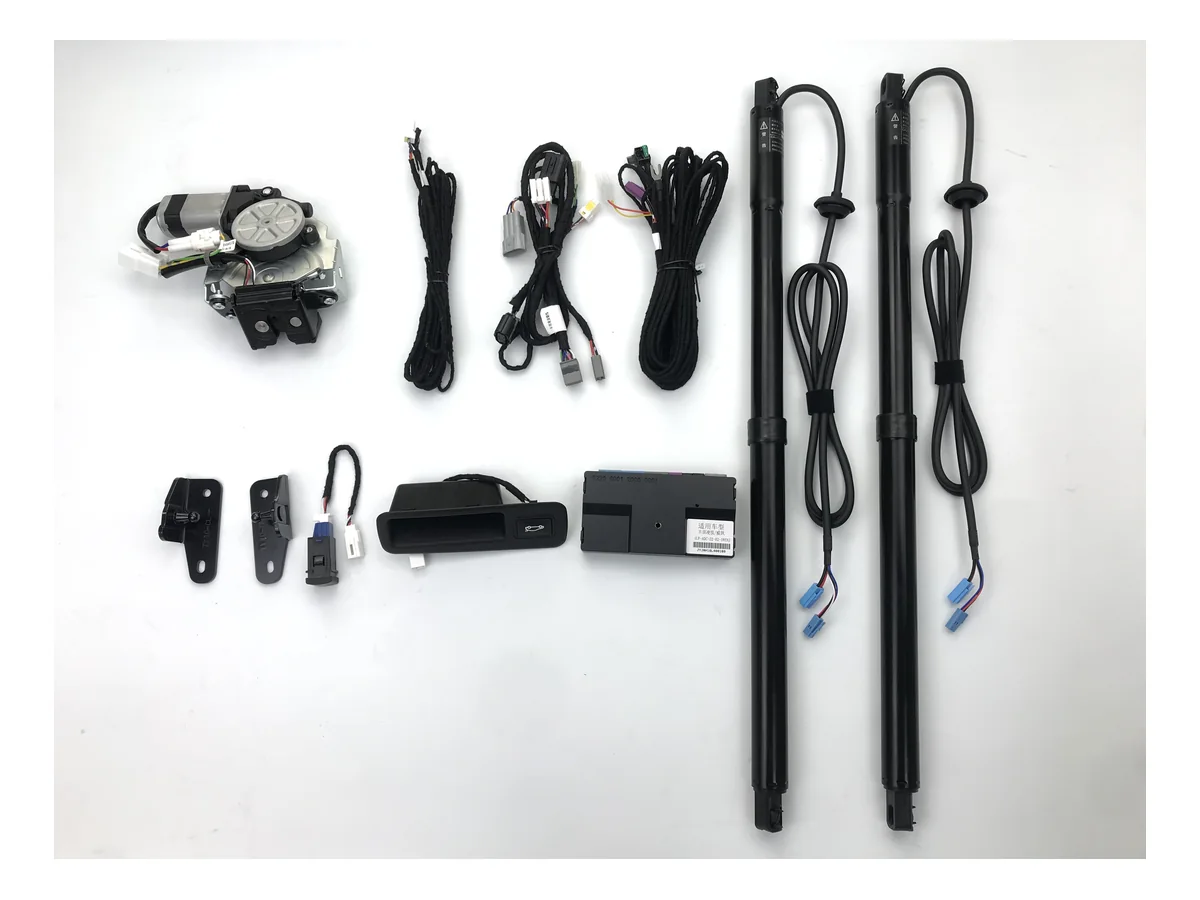
The Innova occupies an unusual position in Thailand: it is both a family MPV and a working vehicle. Airport transfers, hotel shuttles and tour operators run them daily, and the tailgate opens far more often than it would on a private car.
That changes what "power tailgate" needs to mean. This page covers which generations our data includes, what is different about a high-cycle vehicle, and the questions worth asking before ordering — whether it is one unit or a fleet.
What the question actually is
A family owner and a fleet operator are asking slightly different things:
The family owner wants the tailgate to open without putting down the shopping, and wants it to still work in five years.
The fleet operator is asking a cost-of-ownership question: how many cycles will this survive, what fails first, and how quickly can a replacement part be fitted when it does.
Both are legitimate, and a supplier who only answers the first version is not much use to the second.
Which generations we cover
Our program data lists the Innova under three year ranges:
| Program entry | Year range in our data |
|---|---|
| Toyota Innova | 2016–2018 |
| Toyota Innova | 2018+ |
| Toyota Innova | 23 model year |
The standard caveat applies: entries are recorded under the model's Chinese-market name (INNOVA / 伊诺), and year splits differ between markets. Confirm the exact variant for your vehicle rather than relying on the year alone.
The second-generation Innova is the one most Thai operators run, so in practice most enquiries land on the 2016-onward entries. We confirm the specific configuration before quoting.
What matters on a high-cycle vehicle
This is the part that separates a fleet buyer's decision from a private buyer's.
A tailgate that opens four times a day is not stressed the same way as one that opens forty times a day. The parts that see the difference are the ones moving constantly: the strut motors, the latch actuator, and the hinge.
What we can tell you factually about our process:
- Every strut runs on an aging rack before packing. That is a production step, not a claim about a service life figure — we do not publish a cycle rating because we have not completed a documented test to that standard.
- The system is built from separate parts, which matters for a working vehicle: a failed strut can be replaced on its own rather than replacing the whole set.
- The latch is a soft-close type, so the gate pulls itself in rather than needing a firm push — the part most often slammed on a manual Innova.
What we deliberately do not publish: a number of cycles, an IP rating, or a service life in years. Not because they would be unflattering, but because we have not finished documenting them. The kit page shows what is listed and what is marked as not yet published.
For fleet and multi-unit orders
If you are ordering for several vehicles rather than one, the practical differences are:
- Program confirmation per vehicle, not per model — a mixed fleet gets a mixed program list.
- MOQ is 100 sets per order, and mixed vehicle models can be combined in one order subject to confirming the list first.
- Lead time is about 30 working days after order confirmation and receipt of deposit. Sample kits ship in 1–7 days if you want to validate a fit before committing.
- Payment terms: 50% with the order, balance against copy of B/L. Final terms are stated on the quotation.
Details for trade buyers are on the wholesale page. Maintenance and what an operator can check between services is covered on the maintenance page.
What the timeline looks like for a fleet order
Fleet buyers ask this early, because the vehicles earn money only when they are on the road. The sequence, in the order it actually happens:
- Program confirmation per vehicle. You send the list with year and variant; we confirm which programme applies to each. Mixed lists usually come back with more than one programme, not one.
- Quotation in writing. Item list, unit price tier by quantity, and terms. Nothing starts before you approve it.
- Sample, if you want one. Sample kits ship in 1–7 days. For a fleet, this is the cheap way to validate the fit and the installation procedure before committing to the full order.
- Deposit and production. Lead time is about 30 working days after order confirmation and receipt of deposit.
- Balance and shipping. Balance against copy of B/L.
The mistake fleet buyers make is counting the 30 working days from the day they started asking. It starts from confirmed order and deposit — the earlier steps are real time too.
Questions to ask any supplier, including us
- Which program covers my exact year and variant?
- Is the module programmed for the vehicle or universal?
- If a strut fails on a working vehicle, how fast can a replacement ship, and can it be fitted alone? This is the question that decides downtime.
- What is the full item list, in writing?
- What is the lead time, and when does it start? "After deposit" is the answer; "2 weeks" usually is not the whole truth.
What to do next
For a single vehicle: send the model year, variant and a photo of the open tailgate, and we will confirm the program. For a fleet: send the vehicle list and quantities, and we will confirm the program coverage for each unit before quoting.
- Intelligent Power Liftgate Kit — specifications and full item list
- Vehicle program list — models and year ranges in our data
- Wholesale, MOQ and terms — for fleet and trade orders
- Maintenance guide — what an operator can check between services